
BLOG
Ultimate Guide to Choosing the Perfect Diamond Caster for Your Needs
2024-10-17
Ultimate Guide to Choosing the Perfect Diamond Caster for Your Needs
Table of Contents
- 1. Introduction to Diamond Casters
- 2. Types of Diamond Casters
- 3. Materials Used in Diamond Casters
- 4. Key Specifications to Consider
- 5. Applications of Diamond Casters
- 6. Installation and Maintenance Tips
- 7. How to Choose the Right Diamond Caster for Your Needs
- 8. Frequently Asked Questions
- 9. Conclusion
1. Introduction to Diamond Casters
Diamond casters are essential components for a variety of industries, providing mobility and ease of movement for equipment and furniture. These casters are engineered for durability and performance, making them ideal for heavy-duty applications where reliability is paramount. In this guide, we will explore the key features of diamond casters, helping you make an informed choice tailored to your specific needs.
2. Types of Diamond Casters
Understanding the different types of diamond casters available is crucial for selecting the right one for your application. Here’s a look at the most common types:
2.1 Fixed Casters
Fixed casters allow for movement in a straight line only. They are ideal for applications where directional control is not necessary.
2.2 Swivel Casters
Swivel casters can rotate 360 degrees, offering greater maneuverability. This type is perfect for scenarios where you need to navigate around obstacles or change direction frequently.
2.3 Locking Casters
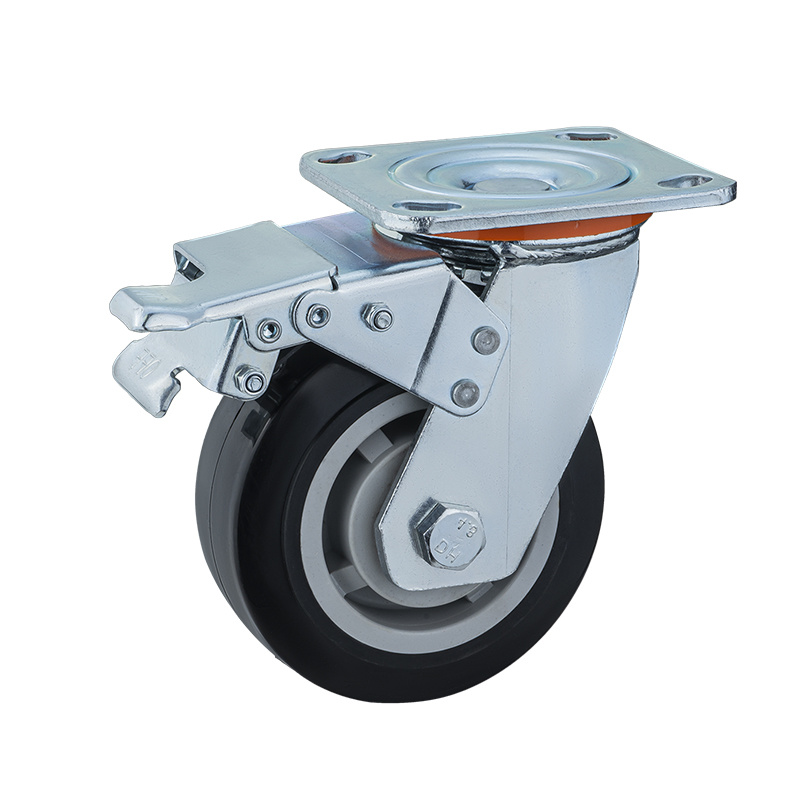
Locking casters come equipped with a brake mechanism that secures the wheel in place. They are essential for maintaining stability, particularly in areas where movement should be restricted.
2.4 Pneumatic Casters
Pneumatic casters are designed for outdoor use and can navigate uneven surfaces with ease. They provide shock absorption and are ideal for construction sites or warehouses.
3. Materials Used in Diamond Casters
The material of the diamond caster plays a significant role in its performance, durability, and suitability for specific environments.
3.1 Polyurethane
Polyurethane wheels are renowned for their durability and resistance to wear. They are suitable for both indoor and outdoor use and provide a smooth ride.
3.2 Rubber
Rubber casters are excellent for noise reduction and shock absorption. They are ideal for use on hard surfaces and are commonly found in hospitals and offices.
3.3 Steel
Steel casters offer strength and stability, making them suitable for heavy loads. They are often used in industrial applications where high weight capacity is essential.
3.4 Nylon
Nylon casters are lightweight and resistant to various chemicals. They work well in environments where spills occur frequently, as they are easy to clean and maintain.
4. Key Specifications to Consider
When selecting a diamond caster, it's vital to consider certain specifications to ensure optimal performance.
4.1 Load Capacity
Understanding the load capacity of the caster is critical. Make sure to select a caster that can safely support the weight of the items it will carry.
4.2 Wheel Diameter
Wheel diameter affects the caster's ability to roll smoothly over obstacles. Larger wheels are better for uneven surfaces, while smaller wheels are suitable for smooth floors.
4.3 Height
The height of the caster can influence the overall height of your equipment. Ensure the height aligns with your requirements to maintain functionality.
4.4 Swivel Radius
The swivel radius affects how well the caster can navigate tight spaces. A smaller swivel radius allows for easier maneuvering in confined areas.
5. Applications of Diamond Casters
Diamond casters are versatile components used in various applications, including:
5.1 Industrial Use
In factories and warehouses, diamond casters facilitate the movement of heavy machinery and equipment, increasing efficiency.
5.2 Medical Facilities
Hospitals and clinics rely on casters for equipment like beds and wheelchairs. Silent operation and easy maneuverability are key features.
5.4 Retail Environments
In retail settings, display units and carts utilize diamond casters for easy movement while ensuring stability and safety.
6. Installation and Maintenance Tips
Proper installation and maintenance are crucial to ensure the longevity and effectiveness of your diamond casters.
6.1 Installation Guidelines
Follow the manufacturer’s recommendations for installation. Ensure that casters are securely attached to the equipment and that the weight is evenly distributed.
6.2 Routine Maintenance
Regularly inspect your casters for wear and tear. Lubricate moving parts and replace worn-out wheels to maintain optimal performance.
7. How to Choose the Right Diamond Caster for Your Needs
Selecting the ideal diamond caster involves evaluating your specific needs against the available options.
7.1 Assess Your Environment
Consider the surfaces the casters will traverse. Will they be used indoors, outdoors, or on uneven terrain? This will inform your material choice.
7.2 Determine the Load Requirements
Calculate the total weight of the items you need to transport. Ensure the chosen casters exceed this weight to guarantee safety and functionality.
7.3 Evaluate Maneuverability Needs
Think about how often you need to change direction. If you frequently navigate tight spaces, opt for swivel casters.
7.4 Consider Aesthetic Aspects
In environments like retail or hospitality, the appearance of the casters may matter. Choose colors and designs that complement your overall aesthetic.
8. Frequently Asked Questions
8.1 What are diamond casters made of?
Diamond casters are typically made from materials like polyurethane, rubber, steel, or nylon, depending on the application and needs.
8.2 How much weight can diamond casters support?
The load capacity of diamond casters varies widely, with options ranging from a few hundred pounds to several tons. Always check the specifications before use.
8.3 Can I use diamond casters outdoors?
Yes, many diamond casters are designed for outdoor use, especially those made with durable materials and pneumatic wheels.
8.4 How do I maintain my diamond casters?
Regularly inspect for damage, lubricate moving parts, and replace any worn-out components to extend the life of your diamond casters.
8.5 What is the difference between fixed and swivel casters?
Fixed casters only move in a straight line, while swivel casters can rotate 360 degrees, allowing for greater maneuverability.
9. Conclusion
Choosing the perfect diamond caster involves careful consideration of various factors, including type, material, specifications, and application. By understanding your needs and evaluating the options available, you can select a caster that ensures reliability, durability, and optimal performance for your specific requirements. Whether you're in an industrial setting, a medical facility, or a retail environment, investing in the right diamond caster will enhance mobility and efficiency.
Key words:
RELATED NEWS
The History and Evolution of Industrial Trolley Casters: A Comprehensive Overview
2025-11-08
Ultimate Guide to Heavy Duty Leveling Casters: Enhance Stability and Mobility
2025-11-01
Innovative Designs in Low Profile Heavy Duty Casters for Modern Applications
2025-10-25

CONTACT US


No. 25 Haiwei Road,Xiaolan Town, Zhongshan City. Guangdong,China 528415

Customer message