
BLOG
The Essential Role of Industrial Trolley Casters in Maximizing Warehouse Efficiency
2024-11-24
The Essential Role of Industrial Trolley Casters in Maximizing Warehouse Efficiency
Table of Contents
1. Introduction to Industrial Trolley Casters
2. Understanding Warehouse Efficiency
3. The Importance of High-Quality Casters
3.1 Types of Industrial Trolley Casters
3.2 Materials Used in Casters
4. Key Factors Influencing Caster Performance
4.1 Load Capacity
4.2 Wheel Size and Design
5. The Impac
The Essential Role of Industrial Trolley Casters in Maximizing Warehouse Efficiency
Table of Contents
1. Introduction to Industrial Trolley Casters
2. Understanding Warehouse Efficiency
3. The Importance of High-Quality Casters
3.1 Types of Industrial Trolley Casters
3.2 Materials Used in Casters
4. Key Factors Influencing Caster Performance
4.1 Load Capacity
4.2 Wheel Size and Design
5. The Impact of Casters on Workplace Safety
6. How to Choose the Right Casters for Your Warehouse
7. Maintenance Tips for Industrial Casters
8. FAQs About Industrial Trolley Casters
9. Conclusion
1. Introduction to Industrial Trolley Casters
Industrial trolley casters are pivotal components in warehouse settings, playing a key role in enhancing mobility and efficiency. These small yet powerful wheels are designed to support the movement of various equipment, including trolleys, carts, and pallets. By allowing for easy transport of goods, they significantly contribute to smoother operations and increased productivity.
2. Understanding Warehouse Efficiency
Warehouse efficiency refers to the effectiveness with which a warehouse manages its operations, from receiving and storing goods to picking and shipping orders. Efficient warehouses minimize costs while maximizing throughput, which is crucial in today’s competitive market. Optimizing every detail, including the use of industrial trolley casters, can lead to substantial improvements in overall performance.
3. The Importance of High-Quality Casters
Investing in high-quality industrial trolley casters is essential for any warehouse operation. These casters are not just about mobility; they must be durable, reliable, and tailored to specific operational needs.
3.1 Types of Industrial Trolley Casters
There are various types of industrial trolley casters designed for different applications:
- Rigid Casters: Fixed wheels that only move in one direction, ideal for straight paths.
- Swivel Casters: Wheels that can pivot 360 degrees, offering greater maneuverability, especially in tight spaces.
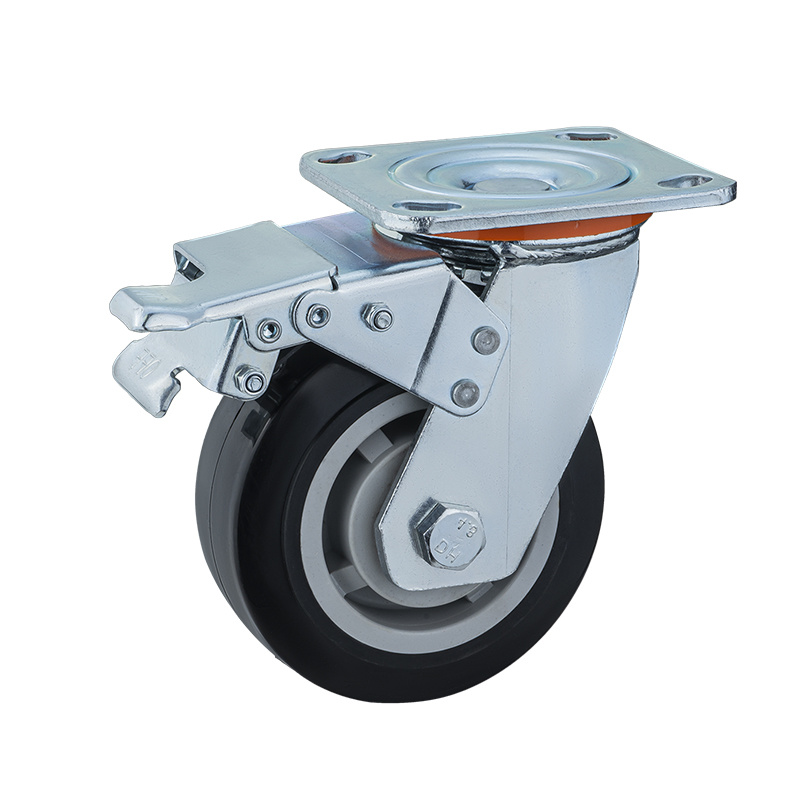
- Locking Casters: Casters equipped with a locking mechanism to prevent movement, enhancing stability when stationary.
- Brake Casters: Similar to locking casters but designed for easy engagement and disengagement of rolling action.
3.2 Materials Used in Casters
The material of the casters directly affects their performance and durability. Common materials include:
- Polyurethane: Offers excellent floor protection and is suitable for various surfaces.
- Rubber: Provides good shock absorption and traction.
- Metal: Ideal for heavy-duty applications but may not be suitable for sensitive floor types.
4. Key Factors Influencing Caster Performance
Understanding the factors that influence the performance of industrial trolley casters is crucial for optimal selection and utilization.
4.1 Load Capacity
Load capacity refers to the maximum weight a caster can safely support. It is essential to choose casters that match or exceed the weight of your loads. Overloading casters can lead to premature wear and potential failure, undermining warehouse efficiency.
4.2 Wheel Size and Design
The size and design of the wheel contribute significantly to performance. Larger wheels roll more easily over obstacles, while specific tread patterns can enhance grip. Selecting the right wheel size and design is integral to ensuring smooth movement within the warehouse.
5. The Impact of Casters on Workplace Safety
Safety is paramount in warehouse environments. Industrial trolley casters contribute to safety in several ways:
- Reduce the risk of injuries by minimizing manual lifting and handling.
- Enhance stability with locking mechanisms, preventing unwanted movement.
- Improve maneuverability, allowing workers to navigate safely even in congested areas.
6. How to Choose the Right Casters for Your Warehouse
Selecting the right casters for your warehouse involves several considerations:
- Assess Your Needs: Determine the type of loads you will be moving and the surfaces you will be navigating.
- Evaluate Space Constraints: Consider the layout of your warehouse and the available space for movement.
- Consider Future Needs: Anticipate any changes in inventory or operational methods that may require different casters.
7. Maintenance Tips for Industrial Casters
Proper maintenance of industrial trolley casters extends their lifespan and ensures optimal performance:
- Regular Inspection: Check for signs of wear, damage, or misalignment.
- Lubrication: Apply appropriate lubricants to bearings and moving parts to reduce friction.
- Cleaning: Keep casters free from debris to avoid jams and ensure smooth operation.
8. FAQs About Industrial Trolley Casters
Q1: What is the best material for industrial trolley casters?
A1: The best material depends on your specific needs. Polyurethane casters are versatile and protect floors, while rubber casters offer traction.
Q2: How do I determine the appropriate load capacity for a caster?
A2: Calculate the total weight of the load and select casters that can support at least 25% more than that weight.
Q3: Can I use casters on uneven surfaces?
A3: Yes, larger wheels are better suited for uneven surfaces as they can roll over obstacles more easily.
Q4: How often should I perform maintenance on casters?
A4: Regular inspections should be conducted monthly, with lubrication and cleaning performed as needed.
Q5: What are the benefits of using locking casters?
A5: Locking casters provide stability and prevent unwanted movement, which is crucial in busy warehouse environments.
9. Conclusion
In conclusion, industrial trolley casters are indispensable tools for enhancing warehouse efficiency. By selecting the right type, material, and size of casters, warehouses can optimize operations, improve safety, and ultimately increase productivity. Proper maintenance further ensures that these vital components continue to perform at their best. Understanding the essential role of industrial trolley casters can lead to significant performance improvements in any warehouse setting.
Key words:
RELATED NEWS
The History and Evolution of Industrial Trolley Casters: A Comprehensive Overview
2025-11-08
The History and Evolution of Industrial Trolley Casters
Introduction to Industrial Trolley Casters
Industrial trolley casters are essential components that facilitate the movement of heavy loads across various industries. From manufacturing to warehousing, these small yet vital tools play a significant role in enhancing efficiency and productivity. Understanding the history and evolution of indust
Ultimate Guide to Heavy Duty Leveling Casters: Enhance Stability and Mobility
2025-11-01
When it comes to enhancing the mobility and stability of heavy equipment and furniture, heavy duty leveling casters are an indispensable solution. These robust accessories are designed to support substantial weight while allowing for easy maneuverability. Whether used in industrial settings, workshops, or even in home environments, the right leveling casters can make a significant difference in ef
Innovative Designs in Low Profile Heavy Duty Casters for Modern Applications
2025-10-25
Innovative Designs in Low Profile Heavy Duty Casters for Modern Applications
Table of Contents
Introduction to Low Profile Heavy Duty Casters
Key Features of Modern Low Profile Casters
Design Innovations Shaping the Future
Materials Used in the Manufacturing of Casters
Applications in Various Industries
Benefits of Low Profile Heavy Duty Casters
Maint

CONTACT US


No. 25 Haiwei Road,Xiaolan Town, Zhongshan City. Guangdong,China 528415

Customer message