
BLOG
Essential Guide to Choosing Market Trolley Casters for Optimal Mobility
2024-11-15
When it comes to enhancing mobility and functionality in various applications, market trolley casters play a pivotal role. These casters are designed to support trolleys used in shopping environments, industrial settings, and even in household applications. The right selection of market trolley casters can significantly affect ease of movement, stability, and overall performance.
Understanding Market Trolley Casters
Market trolley casters are typically equipped with wheels that facilitate smooth movement across different surfaces. Choosing the correct caster involves considering several key factors, including wheel material, size, load capacity, and locking mechanisms.
1. Wheel Material: The material of the wheel greatly impacts the performance of the casters. Common materials include rubber, polyurethane, and nylon. Rubber wheels offer excellent shock absorption and traction, making them ideal for uneven surfaces. Polyurethane wheels are durable and provide a quieter ride, suitable for environments requiring less noise, such as retail stores. Nylon wheels are robust and resistant to wear, making them a good choice for heavy-duty applications.
2. Size and Load Capacity: The size of the wheel affects its ability to roll over obstacles and its load-bearing capacity. Larger wheels are better for navigating rough or uneven terrains, while smaller wheels offer agility in tight spaces. It's crucial to assess the maximum load capacity of the casters to ensure they can adequately support the weight of the trolley and its contents. This will help prevent any potential accidents or damage to the trolley.
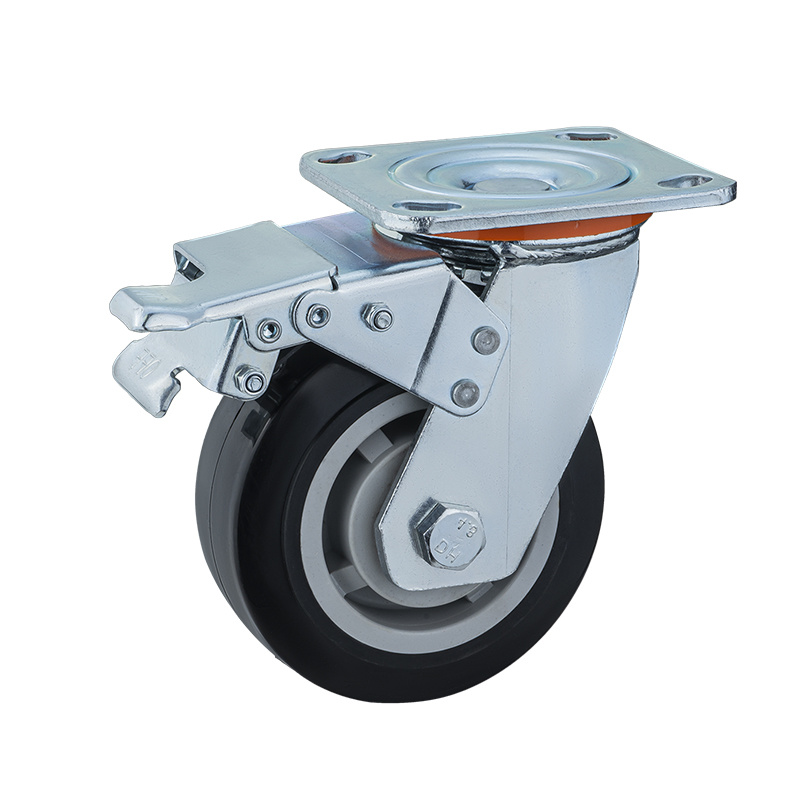
3. Locking Mechanisms: For safety and stability, especially in busy market environments, consider casters with locking mechanisms. These allow you to secure the trolley in place when not in motion, preventing unintended rolling. There are different types of locks available, including total locks that immobilize both the wheel and the swivel, and directional locks that allow wheels to roll only in one direction.
4. Swivel vs. Rigid Casters: Market trolleys can be fitted with swivel casters, which allow for easy maneuverability, or rigid casters that provide straight-line tracking. A combination of both types often works best, providing the flexibility needed to navigate crowded areas while still maintaining stability when moving straight.
5. Compatibility and Maintenance: Ensure that the chosen casters are compatible with the trolley design. Regular maintenance, including cleaning and lubrication, can extend the lifespan of the casters, ensuring smooth operation over time.
In summary, selecting the appropriate market trolley casters involves careful consideration of wheel material, size, load capacity, locking mechanisms, and caster type. By understanding these factors, you can enhance the functionality and safety of your trolleys, ensuring efficient movement in any environment. With the right casters, mobility becomes seamless, making your tasks easier and more efficient.
Key words:
RELATED NEWS
The History and Evolution of Industrial Trolley Casters: A Comprehensive Overview
2025-11-08
Ultimate Guide to Heavy Duty Leveling Casters: Enhance Stability and Mobility
2025-11-01
Innovative Designs in Low Profile Heavy Duty Casters for Modern Applications
2025-10-25

CONTACT US


No. 25 Haiwei Road,Xiaolan Town, Zhongshan City. Guangdong,China 528415

Customer message