
BLOG
Understanding Industrial Casters: A Comprehensive Guide for Professionals
2024-11-19
Industrial casters are crucial components in numerous industries, facilitating the movement of heavy equipment, machinery, and furniture. Understanding the intricacies of industrial casters is vital for professionals involved in hardware tools and accessories, particularly those focused on casters and wheels. This guide aims to highlight key factors to consider when selecting industrial casters, ensuring optimal performance and longevity.
### Key Considerations for Industrial Casters:
1. **Load Capacity**: One of the primary considerations when choosing industrial casters is the load capacity. Each caster is designed to support a specific weight, and exceeding this limit can lead to caster failure and potential safety hazards. It's essential to calculate the total weight of the load and select casters that can handle at least 20% more than this weight for added safety.
2. **Material Composition**: The material of the caster wheel significantly affects its performance and applicability. Common materials include rubber, polyurethane, nylon, and metal. Rubber wheels provide excellent shock absorption and are ideal for uneven surfaces, whereas polyurethane wheels offer durability and resistance to chemicals. Metal wheels are suitable for high-temperature environments or heavy loads. Choosing the right material is crucial based on the intended application and environment.
3. **Wheel Size and Design**: The size of the wheel also plays a critical role in determining the ease of movement. Larger wheels navigate obstacles and uneven surfaces more effectively than smaller wheels, making them suitable for rugged industrial environments. Additionally, consider the wheel design; swivel casters provide maneuverability, while fixed casters offer stability for straight-line movement.
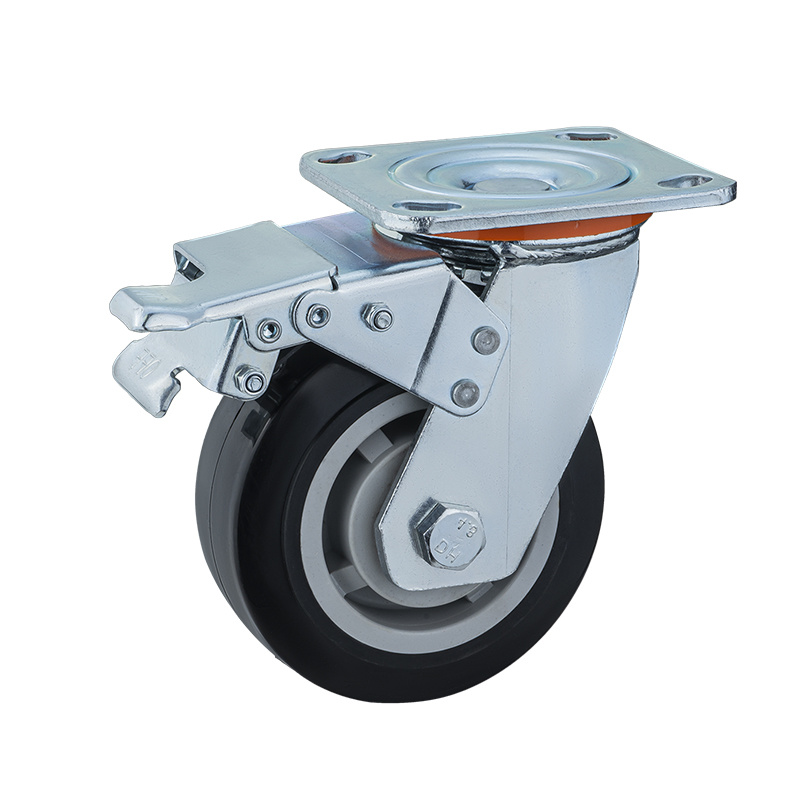
4. **Brake Options**: For safety and control, many industrial casters come with braking systems. Fixed brakes lock the wheel in place, preventing unintended movement, while total-lock brakes secure both the wheel and swivel mechanism. Evaluate the workspace demands when selecting casters with appropriate brake options to enhance safety and operational efficiency.
5. **Environmental Conditions**: Different industrial settings present unique challenges, such as exposure to chemicals, moisture, or extreme temperatures. Understanding the environmental conditions where the casters will be used is essential for selecting appropriate materials and designs that can withstand these factors.
6. **Maintenance Requirements**: Regular maintenance of industrial casters is crucial for ensuring their longevity and performance. Lubrication, inspection for wear, and checking for debris are essential practices that contribute to the operational efficiency of casters. Choosing casters that require minimal maintenance can save time and resources in busy industrial environments.
In conclusion, selecting the right industrial casters involves careful consideration of load capacity, material composition, wheel size, brake options, environmental conditions, and maintenance requirements. By understanding these factors, professionals in the hardware tools and accessories sector can make informed decisions that enhance productivity and safety in their operations.
Key words:
RELATED NEWS
The History and Evolution of Industrial Trolley Casters: A Comprehensive Overview
2025-11-08
Ultimate Guide to Heavy Duty Leveling Casters: Enhance Stability and Mobility
2025-11-01
Innovative Designs in Low Profile Heavy Duty Casters for Modern Applications
2025-10-25

CONTACT US


No. 25 Haiwei Road,Xiaolan Town, Zhongshan City. Guangdong,China 528415

Customer message